
CRM as a Key Success Factor: It All Depends on the Right Implementation and Ongoing Development
CRM projects almost never fail because of the technology itself, but rather due to a lack of strategy, missing processes, a lack of user acceptance, unclear objectives or a lack of ongoing development.
The journey from a simple ‘We’re implementing a CRM’ project to sustainable success requires a careful approach: from involving users and a bespoke implementation, through regular check-ins, to continuous development.
Essentially, the topic of CRM is never truly complete. Rather, it is a journey that accompanies and supports you as you continue to develop. The nature of a CRM is such that this system can grow alongside you and your requirements, because it is modular and highly scalable.
This is precisely the crucial difference between a one-off system implementation and a CRM that is effectively embedded within the organisation.
To ensure that a CRM does not become an isolated software solution but rather a genuine driver of processes and communication, three things are essential: clear responsibilities, sound data and process logic, and consistent integration with marketing, sales and service. Only when these elements work together does a CRM realise its true added value.
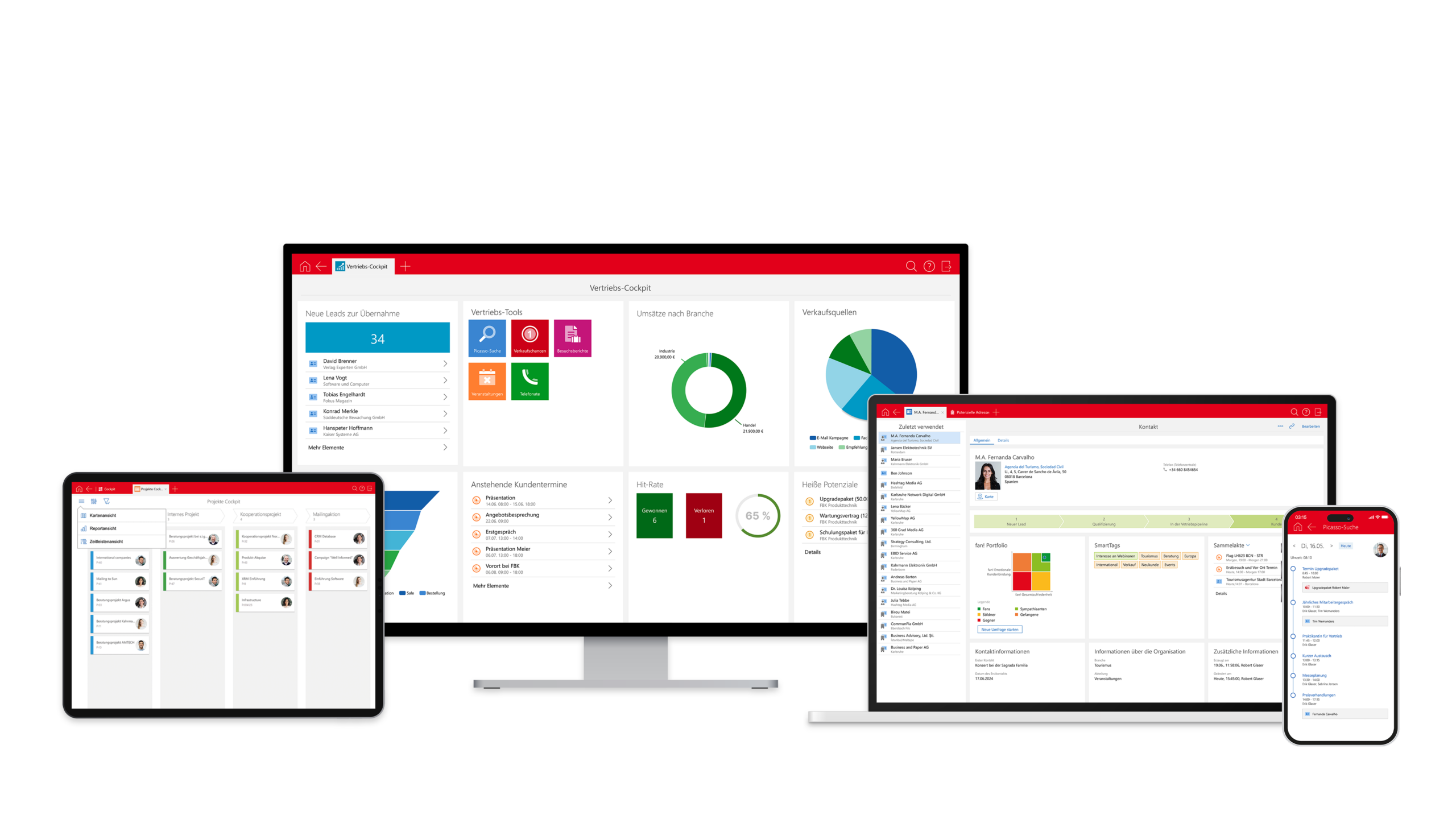
A system such as CAS genesisWorld supports this approach particularly well, as it not only enables the mapping of customer processes but also allows these to be flexibly expanded and adapted – for example, through new workflows, automations or additional modules. The situation is similar with SmartWe, which is of particular interest to companies requiring a cloud-based, rapidly scalable solution that offers clear standardisation whilst remaining highly adaptable.
However, it is important to note: The technical platform is merely the framework.
The real key to success lies in its active use in day-to-day operations. This means that processes must be reviewed regularly, data quality continuously maintained, and users specifically empowered to use the system consistently – not just as a database, but as a working tool.
Companies that understand CRM in this way develop their system step by step:
New requirements from the sales department, changes in marketing strategies or expanding service processes
are not viewed as disruptions, but as a natural part of further development. This is precisely what brings a CRM to life – one that is never ‘finished’, but grows with the company and adapts to new circumstances, rather than the other way round.
Take the first step and get in touch with us – we’d be delighted to support you on your journey towards a CRM that really works.
So gelingt ein CRM-Projekt