

The most important answers about CRM for mechanical engineering companies

We have compiled the most frequently asked questions about CRM for mechanical engineering companies and prepared helpful answers for you. Here are those questions:

  • What is the purpose of a CRM in a mechanical engineering company?
  • What is a CRM system and how does it work?
  • How do I choose the right CRM system for my company?

  • How do I implement a CRM system in my mechanical engineering company?
  • How can a CRM help a mechanical engineering company?
two colleagues factory

What is the purpose of a CRM in a mechanical engineering company?

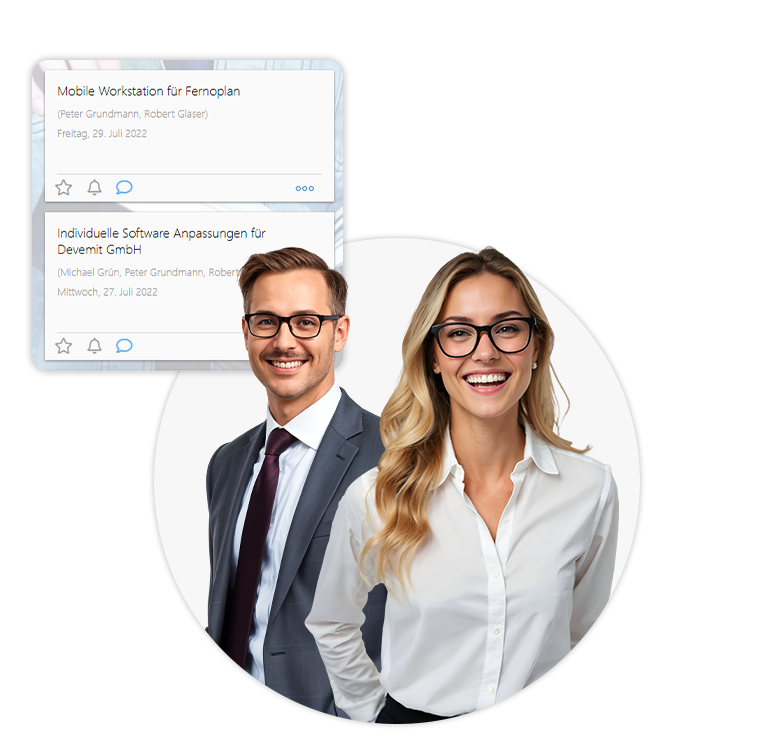
First and foremost, a CRM in a mechanical engineering company is used to manage and strengthen customer relationships. It is particularly well suited for this purpose because it serves as a “single point of truth” for all customer data. At a glance, you can see who last spoke with the customer, what was ordered and when, as well as maintenance intervals and—even in the worst case—any breakdowns. This enables you to act proactively instead of reactively.

In practical terms, for example, a map application integrated into the CRM can display traffic-light indicators showing which machines require maintenance next and the fastest route for your customer visits. You can send the route directly to your navigation system and add the appointment to your calendar.

Once on site, the CRM immediately shows whether the required wear or spare part is in stock. You can add it to the cart on your tablet, and the order and order confirmation are automatically sent to the right contact. Speed is no magic. Finally, you can send an automated yet personalized thank-you message when an invoice has been paid promptly.

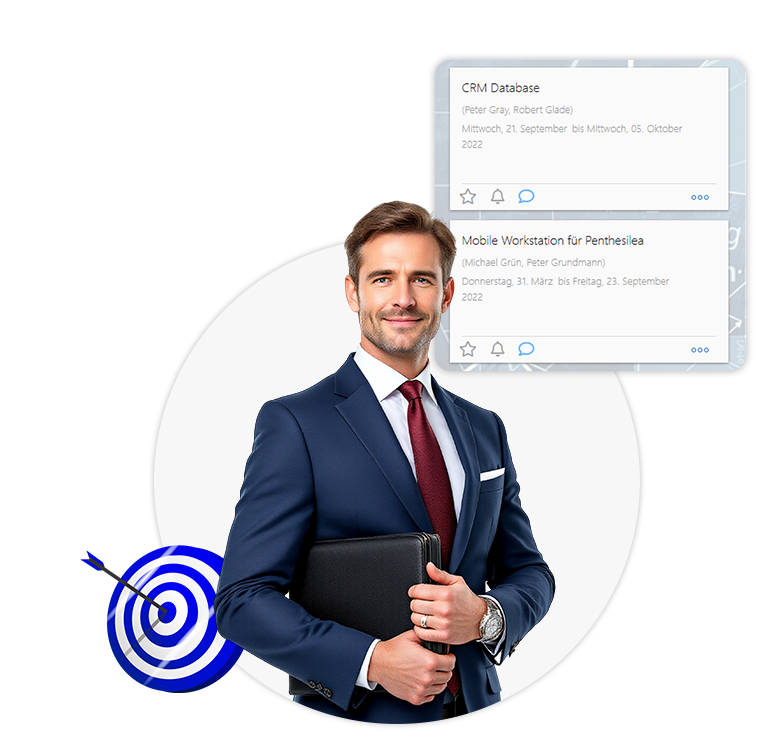
With a CRM, you clearly optimize your sales and marketing processes, use your customer data centrally instead of in Excel or Outlook, capture orders quickly, and gain valuable insights into your customers’ needs.

This not only helps you stay competitive in the market—it allows you to lead the way.
Maschinenbau

This is just one example of the possibilities a CRM offers in the mechanical engineering industry. Another one?

Take a look at the business card scanning feature with integrated email functionality, which is especially popular at trade fairs.

Was ist ein CRM System und wie funktioniert es

What is a CRM system and how does it work?

A CRM system (Customer Relationship Management) works by integrating into your existing processes and offering opportunities to optimize them. Especially in times of skilled labor shortages in mechanical engineering, such a software solution is more important than ever.

By integrating your ERP system, email program, and telephone system, the transition is relatively straightforward. We take care of the IT aspects, while you benefit from the centralized availability of existing data from your systems—whether at contact, branch, or corporate level. Together, we turn this data into automated workflows that move you forward, such as automatic reminders for your sales or service team or the creation of recurring tasks with checklists. This ensures that no one in your mechanical engineering company has to reinvent the wheel.

For employee acceptance, ease of use and intuitive operation are essential. The CRM system genesisWorld (CAS), for example, has even won a Red Dot Award for its intuitive design—something, to our knowledge, none of the well-known U.S. providers have achieved.

Did you know that a CRM can also include task and project management? This allows you to keep track of the status of your sales opportunities and projects at all times. A permissions system ensures that everyone only sees what they are authorized to view.

How do I choose the right CRM system for my company?

Selecting the right CRM system depends on various factors such as company size, number of customers, business objectives, and budget. It is recommended to choose a flexible CRM system that can grow with your company.

In addition, it is essential that the CRM system complies with applicable data protection regulations, particularly the GDPR.


Wie wähle ich das richtige CRM System für mein Unternehmen aus
Wie implementiere ich ein CRM System in meinem Maschinenbau Unternehmen

How do I implement a CRM system in my mechanical engineering company?

Implementing a CRM system requires careful planning and preparation. Define your requirements, analyze existing processes, select the right CRM software, and ensure compliance with data protection regulations.

Train your employees, import existing data, configure the system according to your needs, and test it thoroughly. Clear communication and close collaboration within the team and with the CRM provider are crucial for a successful implementation.

How can a CRM help a mechanical engineering company?

Through efficient customer management, customer data is centralized, enabling quick access to relevant information. Targeted customer engagement is facilitated through segmentation and personalized marketing campaigns. Sales management benefits from tracking and planning the entire sales process.

Effective project management allows for optimal planning, resource allocation, and monitoring of projects. Customer service and support improve through the structured recording of customer interactions and inquiries. Data analysis and reporting provide insights into key business metrics.

In summary, a CRM helps mechanical engineering companies strengthen customer relationships, optimize sales and marketing processes, and make well-informed business decisions.

Wie kann ein CRM einem Maschinenbau Unternehmen helfen

Im Bereich Maschinenbau setzen wir auf modernste Technologien und bewährte Verfahren, um Ihre Produktionsprozesse effizienter und zukunftssicher zu gestalten. Unsere Arbeit orientiert sich an den hohen Qualitätsstandards des VDMA – Verband Deutscher Maschinen- und Anlagenbau, der als führender Industrieverband innovative Entwicklungen und Best Practices für den Maschinenbau fördert. Für aktuelle Normen und Richtlinien empfehlen wir zudem die Deutsche Institut für Normung (DIN), die wichtige Standards für Qualität und Sicherheit in der Branche bereitstellt.
Zusätzlich arbeiten wir eng mit führenden Technologiepartnern zusammen, um Ihnen stets die besten Lösungen anbieten zu können.

client service

Informed. Innovative. Always one step ahead.

Could this be your solution? Send us a message and we’ll get back to you.